The Sandusky County Clerk of Courts is the official office that manages court records for the county courts. The Sandusky County Clerk of Courts receives case filings, records court activity, and keeps legal documents on file. This office supports civil, criminal, and traffic cases. It works as the central point for court paperwork. Courts rely on this office for accurate case history. The Clerk maintains structured filing systems for long-term record use. Case data stays organized for court review.
The Clerk of Court handles court filings, fee records, and long-term records management. This office works with county courts to keep case files current. Public case records follow court rules and filing standards. Office staff manage daily requests during posted clerk office hours. These services support reliable legal records for Sandusky County Courts. Court staff and residents depend on clear record tracking. This process supports transparency across court operations.
What Does the Sandusky County Clerk of Courts Do?
The Sandusky County Clerk of Courts manages the daily flow of court activity and keeps official case materials accurate and organized. This office supports judges, court staff, and the public by handling filings, records, and court data under Ohio law. As the official custodian of court documentation, the clerk plays a central role in records management, court administration, and case filings — ensuring transparency and lawful processing for all matters within the county’s jurisdiction.
At its core, the Sandusky County Clerk of Courts serves as the operational center for local courts. The clerk oversees administrative functions, making sure cases move through the system in a timely and orderly way. Every filing, notice, and court order passes through this office. For this reason, the clerk’s work shapes how smoothly the court functions.
Meet the Current Clerk of Courts
The elected Clerk of Courts for Sandusky County, Ohio, is Christie Schneider. As the county’s chief record keeper and court administrator, Clerk Schneider is responsible for overseeing all facets of court document processing, case docketing, public access to records, and the organization of court data for civil, criminal, traffic, and appellate matters. Her office operates under the mandates of the Ohio Revised Code and works closely with judicial officers to ensure legal records are accurately maintained and accessible to the public and legal professionals alike.
Core Legal and Administrative Responsibilities
The clerk carries defined legal duties set by Ohio court regulations. These duties focus on accuracy, consistency, and lawful handling of court materials. In practice, the clerk acts as the official record holder for many court actions.
Key responsibilities include:
- Records management for civil, criminal, traffic, and appellate matters
- Reviewing and logging filed pleadings and motions
- Maintaining official case documents from filing through final judgment
- Tracking court dates, judgments, and financial entries
- Supporting judges with reliable case files and court data
This work requires careful coordination with judges, attorneys, and court staff. As a result, court operations stay organized and transparent.
Filing Oversight and Public Availability
Filing oversight plays a central role in the clerk’s daily tasks. The office checks filings for correct format, associated filing fees, and compliance with court rules before entering them into the system. At the same time, the clerk maintains historical and active records in both physical and digital formats to support efficient records management and public access to court records.
The clerk also supports public viewing of non-restricted court records. Members of the public may review eligible case details, schedules, and outcomes through approved channels, such as online search tools or in-person terminals at the Clerk of Courts’ office. This service promotes trust in the judicial process and helps residents stay informed about local court activity, from current dockets to past judgments.
How to Find Sandusky County Clerk of Court Records
People can request Sandusky County court records using an online search tool, by visiting the clerk’s office, or by submitting a mail request. Each method offers different access levels, speed, and costs. This section shows the right way to search for records, lists the official websites that provide case information, and breaks down costs for viewing or getting documents.
How to Search Court Records Online
To start a search, users should know one or more case details such as the case number, last name, or filing date range. Then use the official online tools listed below.
Official online search resources:
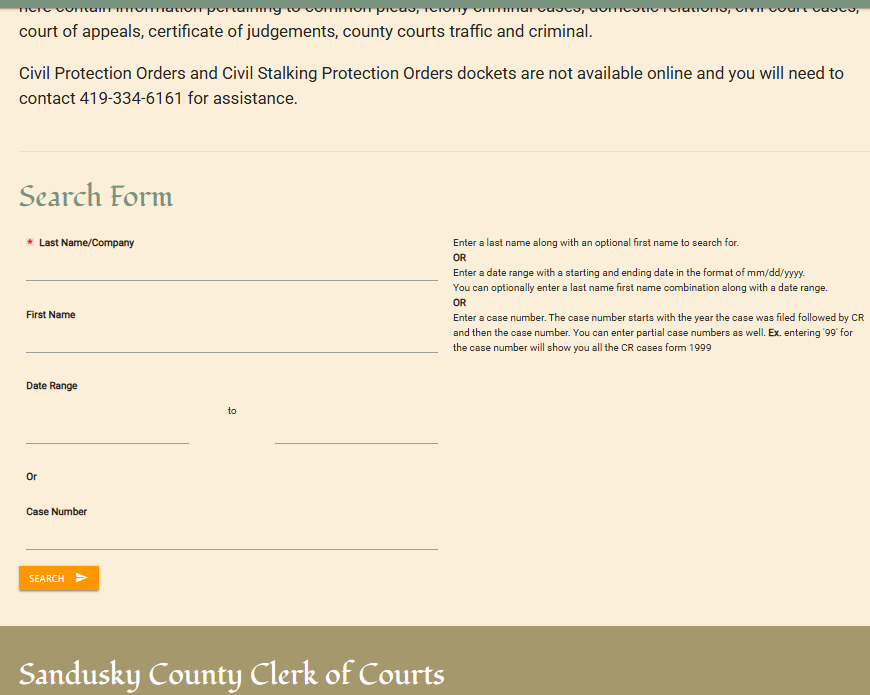
- Sandusky County Clerk Online Case Search:
Search by name or case number on the county’s official search page —
https://sandusky-county.org/clerk/21_record_search/search3.php
- Sandusky Municipal Court Record Search:
Some municipal court cases can be searched here —
https://www.sanduskymunicipalcourt.org/recordSearch.php
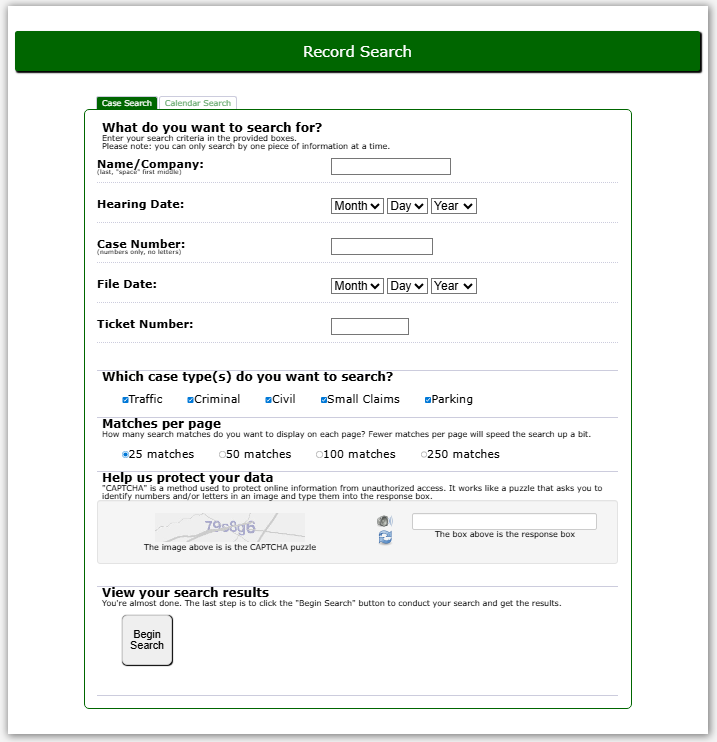
These tools help with quick case lookups and basic docket information. Users can usually view upcoming dates, case status, and related entries without charge.
Where to View Records in Person
For full copies, certified copies, or records not available online, people can visit the Sandusky County Clerk of Courts office in Fremont, Ohio.
When visiting:
- Go to public terminals to search case files on site.
- Tell the clerk the case number or party name you want.
- Ask for copies or certified documents.
Many courts allow free search access from in‑office terminals. Printing or certified copies usually carries a nominal fee. The clerk’s office is at 100 N. Park Ave., Fremont, Ohio 43420 (Clerk hours typically Monday to Friday).
Mail and Written Requests
A written request works when users can’t go in person or need certified copies delivered to them.
Most mail requests require:
- Details such as the case number or the full party name
- A clear description of the documents needed
- A check or money order for estimated copy fees
Mail requests are slower than online or in‑office options. Processing usually takes several days to two weeks, depending on workload and document type.
Cost Table for Court Record Searches
| Method | Online Search | Copy / Download Fee | Notes |
|---|---|---|---|
| Online Case Lookup (Official) | Free | N/A | Basic docket & status only |
| In‑Office Search | Free | $0.25–$1.00 per page | Printing costs apply |
| Certified Copies | N/A | Higher fee (varies) | Official document certification |
| Mail Request | N/A | Varies by pages + postage | Processing time longer |
Courts Served by the Sandusky County Clerk of Courts
The Sandusky County Clerk of Courts supports several court divisions by maintaining official case records and docket activity. These offices handle filings from multiple courts, so residents can locate case records based on the court division involved. Each court served by the clerk manages a distinct case type, with structured docket management and organized court filings. This setup helps users identify where records are filed and how cases move through the system.
Common Pleas Court Records
The Sandusky County Common Pleas Court handles higher-level cases that often involve detailed court filings and extended timelines. This court division covers civil disputes, felony criminal cases, and domestic relations matters. Court staff record filings such as complaints, motions, judgments, and final orders. Docket management plays a central role here, since many cases involve multiple hearings and document updates.
Common Pleas case records may include:
- Civil lawsuits and financial disputes
- Felony criminal charges
- Divorce, dissolution, child custody, and support cases
Each case follows a structured docket, which lists filing dates, court actions, and scheduled hearings. These records help parties track case progress and review official court activity.
Municipal Court Records
Municipal court records focus on lower-level offenses and local disputes. This division handles traffic violations, misdemeanors, and small civil claims within Sandusky County. The clerk manages municipal court records that reflect fast-moving case dockets. Many matters are resolved in a short time frame, so docket updates occur frequently.
Typical filings include:
- Traffic citations and payment records
- Misdemeanor criminal cases
- Eviction and small claims filings
Each case docket shows hearing dates, plea entries, and outcomes. These records help users confirm case status and review court decisions.
Probate & Juvenile Court Records
Probate and juvenile divisions handle sensitive legal matters that involve families, estates, and minors. The clerk maintains probate court records and juvenile filings under strict court procedures. Probate cases may involve estates, guardianships, and trusts. Juvenile court handles matters tied to youth protection and supervision.
Common records include:
- Estate administration filings
- Guardianship and adoption cases
- Juvenile delinquency and custody matters
These court divisions rely on detailed case records and precise docket tracking. Many files follow privacy rules, so record availability depends on case type and legal limits.
Clerk of Court Records in Sandusky County
The Sandusky County Clerk of Court Records include official legal records created during court cases filed within the county. These Sandusky County court records support transparency by documenting case actions, filings, and outcomes across multiple court divisions.
Types of Clerk of Court Records Maintained
The Clerk of Court Records covers civil, criminal, domestic relations, and traffic case files, reflecting all case activity from filing to final judgment. These legal records form the county’s archive and serve judges, attorneys, and the public seeking public court records for reference, verification, or historical research, ensuring an organized and accessible repository of Sandusky County’s legal activity.
Public vs. Restricted Court Records
Many Sandusky County court records are public, including filings, dockets, and judgments, supporting transparency and accountability. Some records remain restricted to protect privacy or safety, such as juvenile cases, adoption files, sealed criminal records, or documents containing sensitive personal data. The Clerk of Court follows Ohio law to manage access to these legal records consistently and securely.
Digital and Physical Record Formats
Sandusky County maintains records in both digital and physical formats. Newer filings are often electronic, including dockets, motions, and judgment entries, which allow for faster searches and case tracking. Older or permanent records remain in secure physical storage, and over time, many files are digitized to preserve accuracy and maintain a complete, reliable records archive.
Record Retention and Archiving Practices
Retention policies determine how long records remain active or archived, with Ohio law guiding timelines based on case type and importance. Short-term records may move to archival storage after case closure, while permanent legal records stay preserved for reference, audits, or appeals. This careful archiving ensures Sandusky County maintains a dependable, well-organized collection of court records.
Court Filings and Document Submission Procedures
The Sandusky County Clerk of Court accepts court filings both electronically and in person, ensuring all documents meet local rules and deadlines. The clerk reviews each submission to confirm it is complete and properly formatted before officially entering it into the court record.
Submitting legal documents in Sandusky County requires attention to filing methods, required materials, and strict deadlines. Court filings can be made electronically via the court’s online system or physically at the Clerk’s office. Electronic filing offers convenience and immediate confirmation, while physical submission may be required for certain forms or when notarized originals are necessary.
Key aspects of document filing include:
- Required Documentation: Each filing must include the correct forms, supporting evidence, and payment of applicable fees. Incomplete documents may be rejected, which could delay court proceedings.
- Filing Deadlines: Deadlines vary depending on case type, including civil, criminal, probate, and traffic matters. Filing on time is crucial to preserve legal rights or avoid penalties.
- Acceptance and Rejection: The clerk examines filings for accuracy and completeness. If an error is detected, the submission may be returned with instructions for correction.
Filing Methods
- Electronic Filing (E-Filing)
- Available for most civil and criminal cases.
- Provides instant receipt confirmation and reduces the need for in-person visits.
- Supported file formats include PDF and other court-approved types.
- Physical Filing at the Clerk’s Office
- Required for certain original documents or filings needing notarization.
- Staff can answer procedural questions and ensure forms meet court standards.
- Payment can be made via cash, check, or card, depending on the document type.
| Filing Method | When to Use | Fee Payment Options |
|---|---|---|
| Electronic Filing | Most civil, criminal, and traffic cases | Online payment via portal |
| Physical Filing | Original documents, notarized forms, probate filings | Cash, check, card |
Filing Fees and Payment Information
The Sandusky County Clerk of Courts requires filing fees for most cases, and the amounts vary depending on the case type. Payments can be made using several accepted methods, and fee waivers or refunds may apply in specific circumstances.
Filing fees are a standard part of court processes and cover administrative costs, court staff time, and record maintenance. The exact amount depends on the type of case, such as civil, criminal, probate, or traffic cases. For example, civil case filing fees typically range from $100 to $300, while small claims or traffic violations usually cost less. Keeping a current court fees schedule helps users estimate costs before filing.
Fee Variability by Case Type
- Civil Cases: Fees are usually higher due to the complexity and court resources involved.
- Criminal Cases: Court costs vary based on misdemeanor or felony charges.
- Probate and Family Cases: Fees can differ depending on whether the filing is for guardianship, adoption, or divorce.
- Traffic Violations: Often lower, sometimes just a nominal court cost or fine.
Accepted Payment Methods
The Clerk of Court accepts multiple payment options for convenience:
- Cash at the courthouse
- Checks or money orders payable to Sandusky County Clerk of Court
- Credit and debit cards are processed with standard payment processing fees
- Online payments through the official county court portal, if available
Refunds and Waivers
Certain situations may qualify for fee adjustments:
- Fee waivers may be granted to individuals who cannot afford the filing fees.
- Refunds are available if a case is dismissed before processing or if an overpayment occurs.
- Proper documentation is required to request a waiver or refund, and the clerk reviews each case individually.
| Case Type | Typical Filing Fee | Notes on Payment Options |
|---|---|---|
| Civil | $100–$300 | Cash, check, card |
| Criminal | $50–$250 | Fee varies by offense level |
| Probate/Family | $50–$200 | Online payment is often accepted |
| Traffic/Minor | $25–$100 | Online payment often accepted |
Certified Copies and Official Court Documents
Certified copies are official reproductions of court records that carry the clerk’s signature and seal, confirming their authenticity. These documents are legally recognized for use in court, government processes, and personal matters requiring proof of record.
Sandusky County offers both certified and non-certified court documents, each serving different purposes. Non-certified copies are simple duplicates of records for personal reference or research, while certified copies carry legal weight and are required in formal proceedings.
Difference Between Certified and Non-Certified Copies
Certified copies include:
- Clerk’s signature or stamp confirming authenticity
- Official seal of the court
- Date of issuance
Non-certified copies, in contrast, are plain photocopies or printouts from court records without official validation. They are suitable for personal use but usually cannot be used for legal filings, property transactions, or official verification.
When Certification is Required
Certification is typically required for:
- Filing in another court or jurisdiction
- Legal transactions, such as property deeds, adoptions, or probate matters
- Government applications, including passports or benefits
- Marriage, divorce, or other civil records needing legal proof
Some routine inquiries or informational needs do not require a certified copy. Checking with the Sandusky County Clerk of Court helps determine whether certification is necessary for a specific purpose.
How to Request Certified Copies
Requesting certified copies in Sandusky County is straightforward. Steps include:
- Identify the record type (criminal, civil, probate, or marriage/divorce)
- Complete a request form at the Clerk of Court office or online
- Provide necessary details, such as case number, names, and dates
- Pay the required fee, which varies depending on document type
- Receive the certified copy either in-person, by mail, or electronically if available
Tips for faster processing:
- Double-check all spelling and dates on your request
- Include a self-addressed stamped envelope for mailed copies
- Specify certified status clearly on the form
Certified copies serve as official court records, giving them credibility and legal authority. Using the correct type of document ensures smoother legal, financial, or administrative processes.
Sandusky County Clerk of Court Office Hours & Contact Information
The Sandusky County Clerk of Court office is open to the public during standard weekday hours, providing in-person and phone support for filings and court inquiries. Visitors can reach the office directly by phone or email for assistance with case records, documents, and court procedures.
The Clerk of Courts’ office is located at 915 Croghan Street, Fremont, Ohio 43420, conveniently positioned near the courthouse complex. Office hours typically run from 8:00 a.m. to 4:00 p.m., Monday through Friday, excluding county-observed holidays. These hours allow residents to file documents, request records, or speak with court staff about ongoing cases.
Contact Options
- Phone: (419) 334-3886 – Available during office hours for general questions and case inquiries.
- Email: clerk@sanduskycountyoh.gov – Ideal for non-urgent questions or requests for documents.
(FAQ) About the Clerk of Courts
The Sandusky County Clerk of Courts provides access to many court records, but some documents remain restricted for privacy or legal reasons. The office is not a court judge but serves as the official record keeper for local courts.
Are Sandusky County court records public?
Most court records in Sandusky County are available to the public, including civil, criminal, and traffic case filings, as well as marriage and divorce records. Some files are restricted to protect privacy or comply with state law, such as juvenile cases, sealed adoptions, and sensitive criminal records. The Clerk’s office can provide information on which records are accessible and which require special permission or a court order.
How long does it take to receive records?
The time it takes to receive court records depends on the type of request and the format of the documents. Viewing case dockets in person is usually immediate, while requests for certified copies or records stored in physical archives may take several business days. Mailed requests typically require five to ten business days, and the Clerk’s office processes requests in the order they are received to ensure accuracy and compliance with legal standards.
Can anyone access Clerk of Court records?
Most records maintained by the Clerk of Court are available to the public, including attorneys, researchers, and citizens, but certain sensitive files have restricted access. The Clerk’s office ensures that all requests follow Ohio law, and staff can guide individuals on which records require authorization. While staff can assist with locating and copying records, they cannot provide legal advice or interpret case rulings.
What documents cannot be viewed online?
Not all records are available online due to privacy protections and legal restrictions. Examples include juvenile court files, adoption and guardianship records, certain criminal investigations, and sealed civil cases. Requests for these documents must be submitted in person or through a written application, and the Clerk’s office can confirm whether special permission or a court order is necessary to access the files.
Is the Clerk of Court the same as the court judge?
No, the Clerk of Court is an administrator and official record keeper for the courts, while judges oversee hearings, rulings, and case decisions. The Clerk manages filings, schedules court dates, issues certified copies, and ensures records are maintained accurately. They facilitate access to documents but do not provide rulings, legal opinions, or advice to the public.